


Girls and Women on the Frontline of Heat: A Comic Book Turning Climate Science into Policy Power
Published: March 3, 2026
In a world where rising temperatures are reshaping daily life, a new graphic novel is empowering communities and the next generation to understand and act on climate change through a relatable, locally tailored narrative designed for children, youth and adults alike.
Developed as part of the RAHAT project – a women-led, action-oriented research initiative that partners women, communities, and design experts to co-develop passive cooling housing solutions in the heat-vulnerable areas of Rajasthan, India – the newly launched comic blends storytelling with real-world science and social impact on the ground.
Children as agents of change
“At its heart, this comic is about agency: educating and engaging children creates pathways into households. Children discuss with parents, making adaptation concrete, as environmental education often can be very abstract”, says Ronita Bardhan, Professor of Sustainable Built Environment & Health at the University of Cambridge, and advisor on the project. “At the same time, children often experience climate anxiety because they do not see actionable pathways in daily life. Here we show them that they can bring about change both at home and in their own neighbourhoods.”
In the comic, illustrated by award-winning animator Mahafuj Ali, the protagonist -a young girl called Meera- and her family face a heatwave that disrupts daily life: school becomes uncomfortable and their home is so warm that grandma isn’t feeling well. When Meera’s mother cooks, their home becomes hot as a fireplace.
“Indoor heat is one of the most under-recognized public health risks of climate change”, says Abhiyant Tiwari, Health & Climate Resilience Lead at the Natural Resources Defence Council (NRDC) India, and Global Heat Health Information Network Management Committee member. “By demystifying it through storytelling, we are accelerating both awareness and action.”
“Co-creation is at the heart of Rahat, and this comic book. With our key partners Bijal Brahmbhatt Mahila Housing Trust and the NRDC, we wanted to position children -and especially girls- not as bystanders, but rather as “Climate Champions”, fully capable of contributing to solutions in their communities and families”, says Bardhan. “Our illustrator, who is also a landscape architect with scientific understanding, participated in every research meeting from the outset. With access to data, photographs, and thermal imagery, this became an ongoing collaborative process deeply rooted in local context – far from being just a final-stage illustration task or an AI-generated product.”
Frugal first
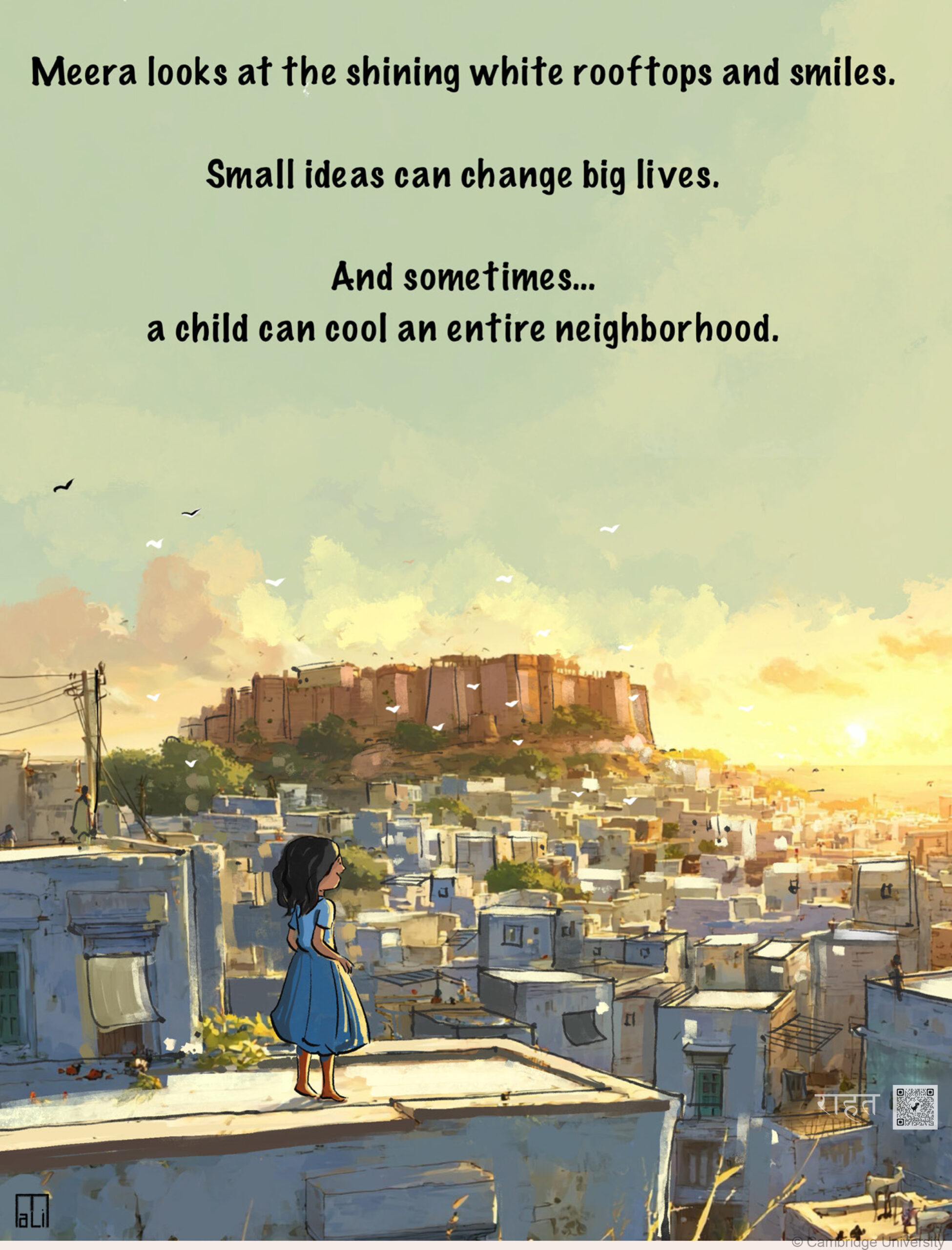
As the story unfolds, Meera is introduced to real-world concepts around heat: what causes heat stress, how humans feel and respond to heat, and what exactly passive cooling solutions mean. Meera, thanks to her acquired knowledge, then walks both her family and the reader through shading, ventilation, reflective materials, and thoughtful design.
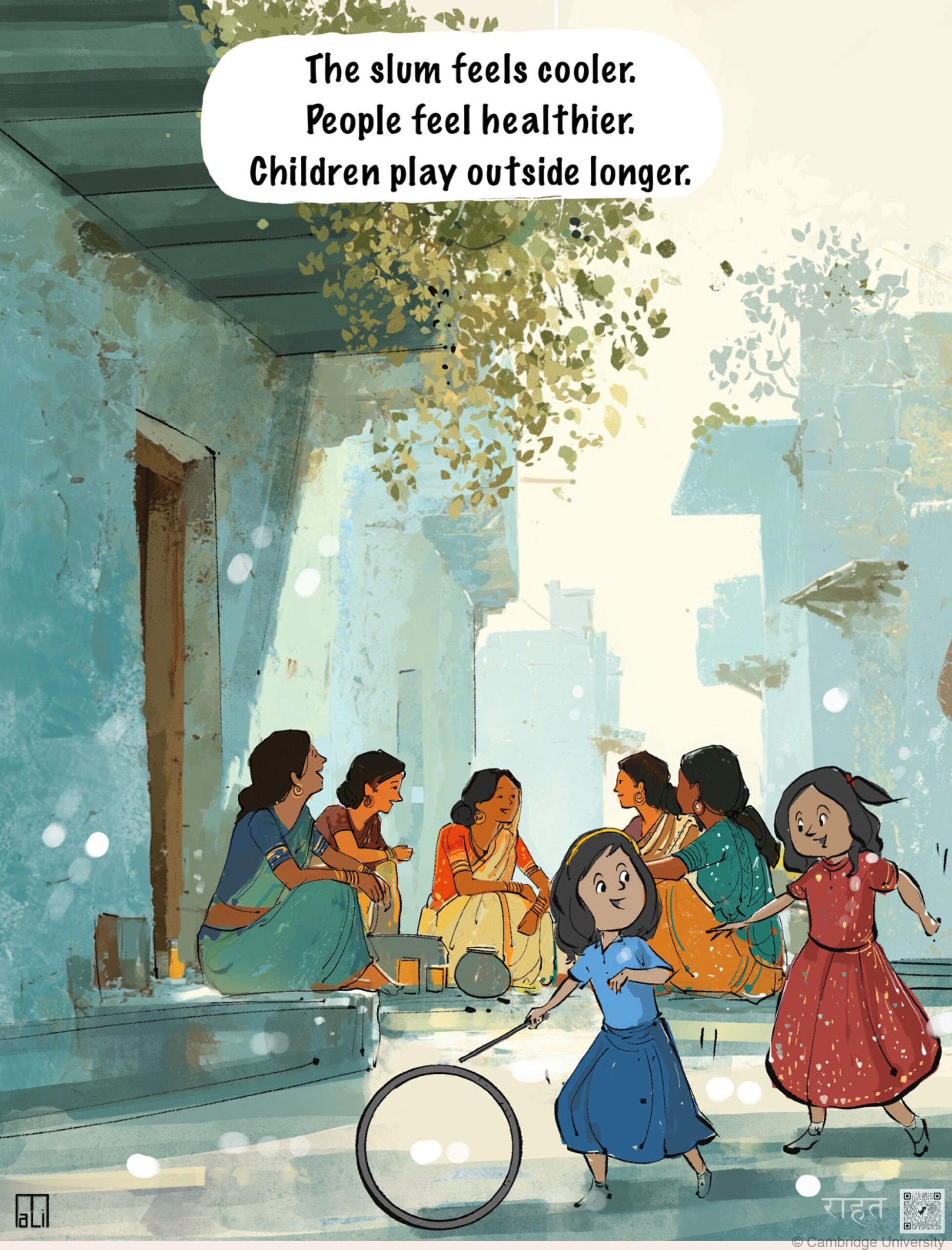
Together, Meera and her mother use simple solutions to make their home cooler without energy-intensive technology. But change doesn’t stop there: the neighbours notice, and soon Meera’s solutions spread like a firefly throughout the community.
“By working with women through Mahila Housing Trust, supported by UK Research and Innovation (UKRI) and Minderoo Foundation funding, we were able to study frugal, community-led solutions that address heat stress while creating local innovation and micro-enterprises – such as painting roofs with white colour”, Bardhan explains.
With women, for women
The RAHAT project meaningfully embeds women as knowledge holders, decision-makers, and implementers, advancing gender-responsive climate adaptation alongside innovative design research.
“Our primary intention with the project was knowledge transfer, but we also wanted to close a critical evidence gap. For example, many housing modifications are promoted across Global South cities, yet the data on their real health impact is often sporadic and non-contextualised. We designed a randomised control treatment study to measure whether these interventions genuinely reduce indoor heat exposure”, says Bardhan.
Despite living in the same regions or cities, heat can affect women and girls in different ways at different times than men – and cooling solutions also carry a gender element to them.
“One example of how heat affects women differently is how they are the ones navigating the hottest hours of the day at home, often alone and without agency over cooling energy use. During our research, when we showed women thermal images of their homes and their own skin temperatures, data made their invisible burden visible”, says Bardhan. “This gave them concrete negotiating power to act.”
Even with access to air conditioning, women may refrain from using it due to financial constraints, domestic power structures, or cultural expectations that position them as the family’s shock absorbers. The project also found that agency can vary depending on inter-generation norms. “A grandmother may have more decision power in a household, while a newlywed may fear imposing herself or her views”, explains Barhdan. “That’s why we focused on passive cooling in Meera’s story as an ‘invisible infrastructure’ – solutions women can use without drastic behavioural change, and within their own context”, says Bardhan.
Telling the story, propelling policy
As part of the broader initiative, the comic book is one of two critical resources translating UKRI-funded research into actionable tools for heat adaptation in Rajasthan. In addition to the comic, the Rahat project has published a policy brief titled “The Invisible Threat: Why Indoor Heat Can Be More Dangerous Than Outside Temperatures”, outlining evidence-based heat adaptation strategies for low-income housing tailored to the thermal challenges of Rajasthan.
The team is already eyeing “Rahat 2.0”, focused on translating research into policy impact through stakeholder workshops linked to State Heat Action Plans. Ahead of peak heat months, policymakers & experts are expected to convene to explore how evidence from Rahat -including the comic book- can inform practical adaptation pathways. Plans also include distributing printed copies in primary schools, alongside a freely downloadable and locally translated version. Beginning at the state level, the ambition is to scale engagement nationally, contributing to India’s broader climate adaptation and heat resilience strategies.
“More than just a comic book, this project highlights the many ways in which we can communicate about climate, heat and solutions”, Bardhan concludes. “Combining data and evidence with imagination, empathy, and trust in the capacity of young people to lead, we can spur not only policy change, but invite children -and especially girls- to become Climate Champions in their communities – not some day, but today.”
You might also be interested in...