


Thai Rice Farmers in an Era of Global Boiling
Published: January 20, 2026
Thailand
..
For many Thai rice farmers, especially the elderly, farming is not a choice, but a necessity driven by the need for income and the obligation to keep their modest plots of land productive. These farmers are not merely facing thermal discomfort in their work; they are battling extreme heat. This environmental threat is particularly lethal for those with pre-existing health conditions, where prolonged exposure to the scorching sun can escalate from health impairment to fatality.
While modern machinery and technology have theoretically reduced some of the time spent in fields, for a farmer, “saved time” does not always equate to “rest.” Once the rice is harvested, financial constraint often drives them into secondary manual labour such as construction work, cattle rearing, or odd jobs to supplement their insufficient earnings. The necessity to work outdoors in searing temperatures remains an unavoidable constant. Their adaptation is limited to precarious survival tactics by shifting work hours to the early dawn or late dusk, and relying on wide-brimmed hats and water jugs.
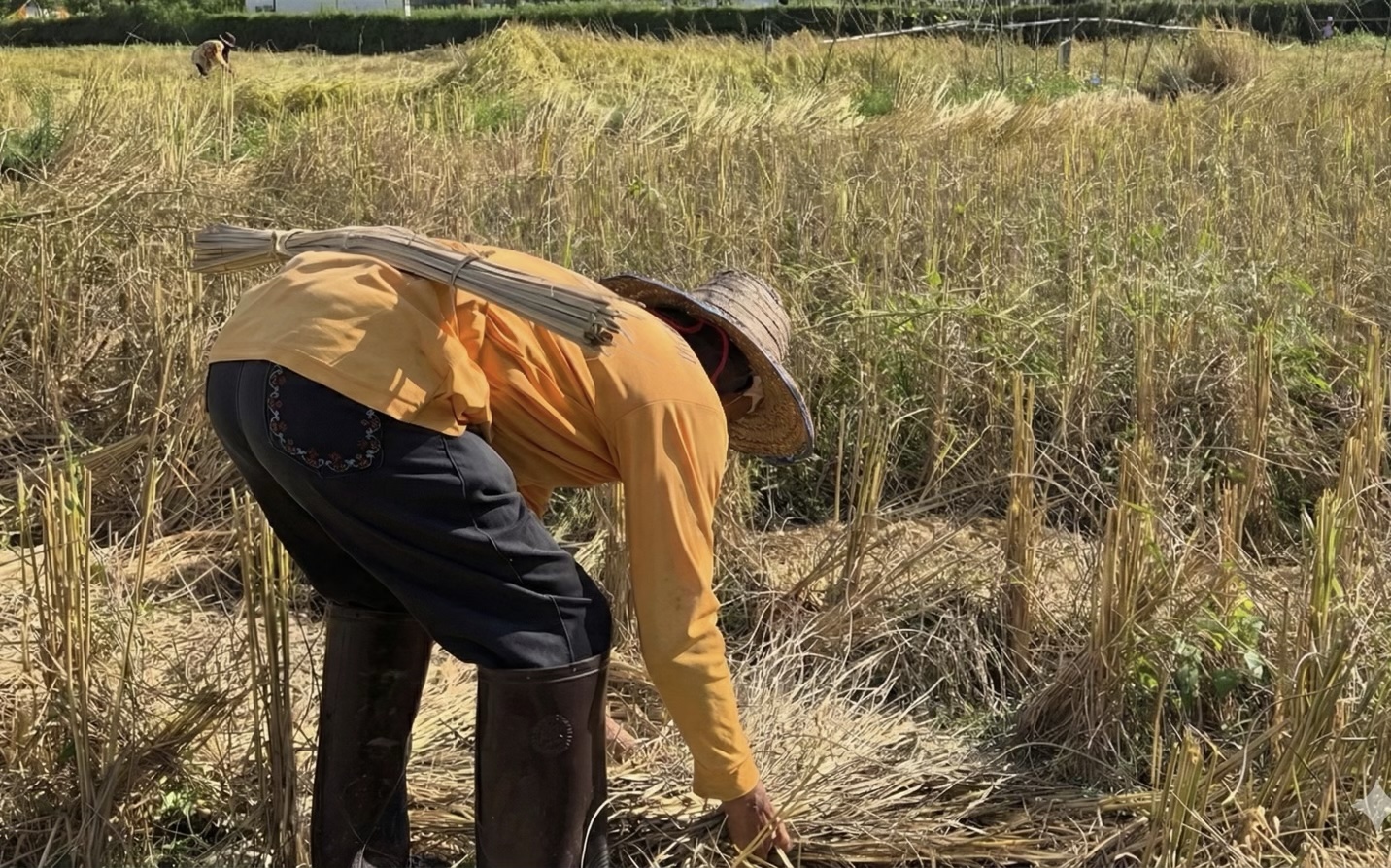
The female worker in the picture is 68 years old and has spent more than five decades farming. She lives with chronic health conditions – high blood pressure and elevated cholesterol – increasing her risk of fatigue and heat-related illness. Despite her condition, she continues harvesting rice by hand under the intense heat. Her physically demanding work is driven by the need to sustain her livelihood and manage ongoing debts.
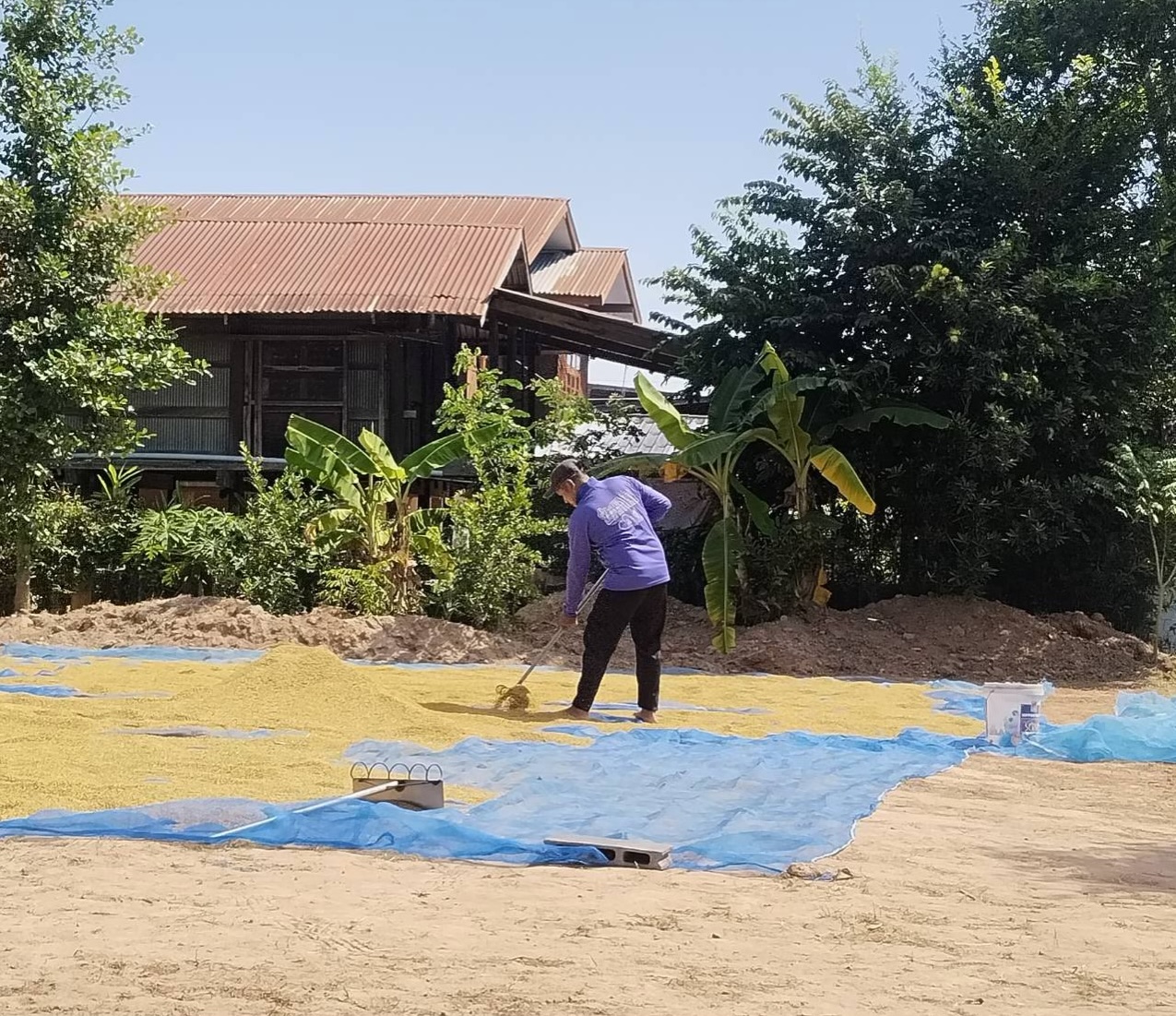
The rhythmic refrain, “Farmers are the backbone of the nation,” has long served as a testament to the labourers who fuel Thailand’s status as a premier global rice exporter. Yet, beneath this honourable epithet lies a harrowing reality, communities of small-scale farmers trapped in a cycle of poverty with limited options and physical deterioration.
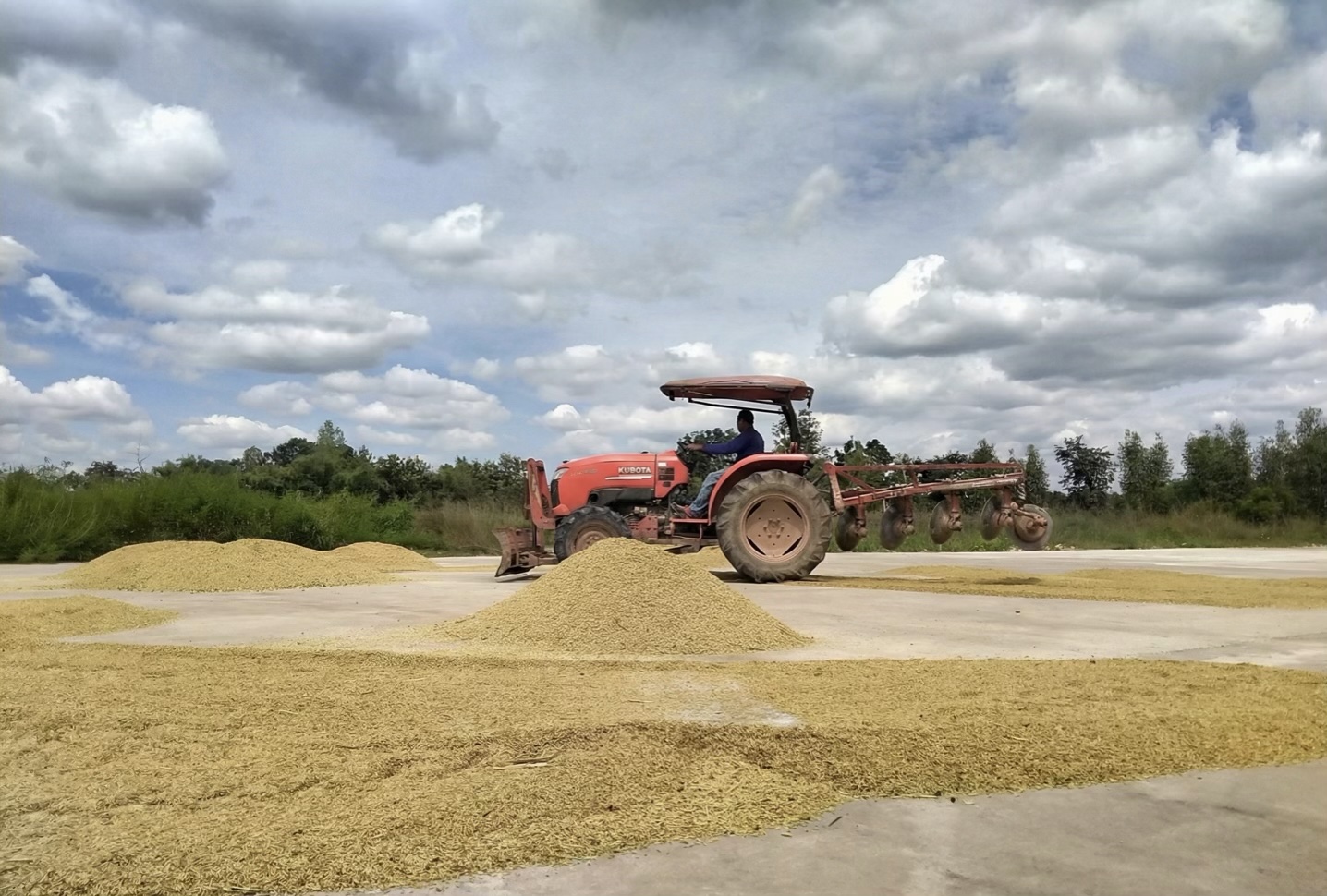
Agricultural workers constitute a vast portion of Thailand’s informal labour sector, a group largely beyond the reach of traditional occupational safety laws. Current regulations regarding heat safety and workplace environments are virtually unenforceable in the context of informal workers. This presents a critical challenge that demands a multi-sectoral shift in policy, in order to translate academic safety standards into practical, community-aligned regulations.
As the seasons transit from late October to November, the plains of Northeastern Thailand known as the Isan region, shimmer with the golden hue of ripening grain. But this beauty is accompanied by a relentless, radiating heat. In the village of Ban Nong Um in Mahasarakham Province, where rice cultivation is the lifeblood of the community, the phrase “Mue nee pen yang khue ma hon ka do ka dia” (Why is it so unbearably hot today?) has become a common lament from those forced to labour under the open sky.
The phrase “The backbone of the nation” cannot remain an empty slogan that leaves farmers to face intensifying heat and environmental pressures alone while they sustain our vital food systems. Genuine appreciation must be reflected and transformed into substantive health policies, improved protection, and socio-economic security.
The Global Heat Health Information Network Southeast Asia Hub is positioned to advance this critical work. By leveraging such regional networks, facilitating collaboration, strengthening knowledge exchange, and connecting local lived experience with global expertise, the regional hub can help ensure that farmers at the center of food production remain supported, healthy, and resilient in a rapidly warming world.